
There are some advantages for employing the use of cover crops in agriculture. Cover crops used to recondition soil are one of the primary reasons for its implementation. These types of crops enhance soil structure, moisture content, promotes soil nutrition and helps to prevent soil erosion as well. These properties are imparted to the soil when the crop is used as a mulch. This usually happens when the crop is mowed or harvested and the residual is left as fallow afterwards. In essence, cover crops can serve as a type of 'rotation crop' when the extended use of a primary crop tends to have the effect of depleting nutrients or soil condition. These soil properties can be restored through the use of cover crops. The soil reconditioning process happens as the crop is plowed and a certain amount is left on the ground to become a mulch later on. Cover crops are seeded varieties such as clover or various grass types. It is recommended that a dense cover crop be used to establish a mulch for the above stated reasons. In addition, a dense cover crop can also prevent the outgrowth of weeds. If the crop is dense enough, it could also serve as an energy crop such as those used to help produce biofuel or bioelectricity. For example, the use of Anaerobic Digestors could be a viable way to produce combined heat and power (CHP) on farms using cover crops such as grasses. The biogas made from an anaerobic digestor can serve as a natural gas source that can be used for either boilers or generators for either electricity, heat or both. The effectiveness of a cover crop can be related to how dense or thick it becomes.
Two measureable indicators of crop density are crop height and amount of ground cover (percent vegetation cover).In a past study used on vineyards, over 30 types of different cover crops were measured for their plant height and vegetation cover.The results of the study showed that around half of the crops had plant heights from 18 - 36 inches and many also had at least 70 % vegetation cover [ 1. Bugg 1996 ]. Cover crops also have the possible use in home gardening. The ability to convert cover crops into mulch material can be applied later on as a compost for the garden. The crop can also be used directly to improve soil conditions due to a variety of reasons. These plants promote the deposition of carbohydrate compounds near the roots from microorganisms, the roots also form an underground network the may allow for future plants to follow known as biodrilling [ 2. Pleasant 2009 ]. The use of cover crops also serves the purpose of pest protection, especially for citrus orchard, nut or vineyard crops. For example, the use of cover crops were employed
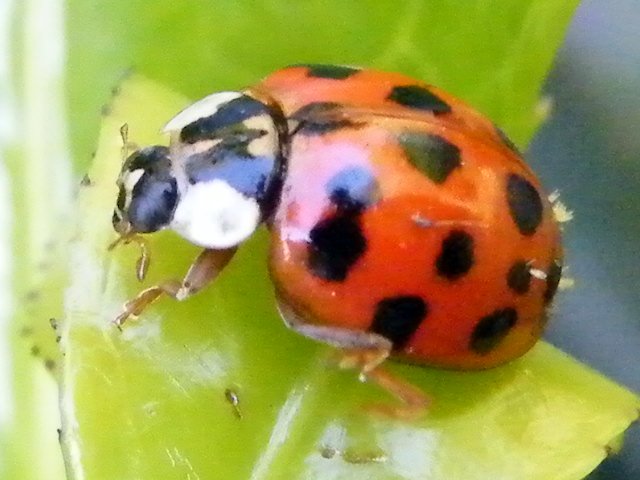
for the control of aphids that were comprimising specific pecan orchards. Many aphids in these types of orchards are resistant to insecticides to a specific type of cover crop was grown to help halt the growth of aphids by providing a habitat for ladybugs that feed on aphids [ 3. Bugg et al 1993 ]. Cover crops may not always be effective in eliminating pests, due to various factors that are not as controllable or if the crop is mismanaged. Overall, cover crops can be utilized by various types of farms, orchards or home gardening, which may be able to serve several functions at one time such as soil nutrition, prevent erosion, become an energy crop, and control weeds or insect pests.
for the control of aphids that were comprimising specific pecan orchards. Many aphids in these types of orchards are resistant to insecticides to a specific type of cover crop was grown to help halt the growth of aphids by providing a habitat for ladybugs that feed on aphids [ 3. Bugg et al 1993 ]. Cover crops may not always be effective in eliminating pests, due to various factors that are not as controllable or if the crop is mismanaged. Overall, cover crops can be utilized by various types of farms, orchards or home gardening, which may be able to serve several functions at one time such as soil nutrition, prevent erosion, become an energy crop, and control weeds or insect pests.
REFERENCES
1. "Comparison of 32 Cover Crops in an Organic Vineyard on the North Coast of California", Biological Agriculture and Horticulture Vol 13 pgs 63-81 [1996] by R. Bugg, G. McGourty, M. Sarrantonio, W.T. Lanini, R. Bartolucci
2. "Cover Crops: Options, Tips and Advantages for the Home Garden" - Mother Earth News - Oct/Nov 2009 by Barbara Pleasant
3. "Sesbania exaltata Cory as a Warm Season Cover Crop in Pecan Orchards: Effects on Aphidophagous Coccinellidae and Pecan Aphids", Biological Agriculture and Horticulture Vol 9 pgs 215-229 by R. Bugg and J. Dutcher
Photos taken from the Picasa Web Album
KEYWORDS: Natural Pest Protection, Cover Crops for Vineyards & Citrus Orchards, Cover Crop Density and Height, Rotation Crops, Fallow, Reconditioning Soil, Cover Crops for Bioenergy, Preventing Soil Erosion, Mulches, Composts, Soil Nutrition, Grass & Clover Cover Crop Plants, Natural Weed Control

Custom Search


